Introduction
The back-to-school season is one of the most predictable yet highly competitive sales periods in the global retail calendar. Every year, millions of parents prepare their children for a new academic year, creating strong and consistent demand for essential daily products.
Among these categories, reusable water bottles have become a standard purchase—no longer optional, but expected.
For retailers, importers, and distributors, this presents a significant opportunity. However, success in this season is not simply about stocking inventory. It requires:
- Choosing the right product types for different age groups
- Balancing safety, functionality, and design
- Understanding parent purchasing behavior
- Managing supply chain timing and inventory risk
Unlike holiday-driven markets such as Christmas or Valentine’s Day, back-to-school purchasing is highly practical and decision-driven. Parents prioritize safety, usability, and durability over aesthetics alone, while children are influenced by design, colors, and usability.
This dual decision-making process makes product selection more complex—but also more strategic.
In this guide, we will break down:
- What types of kids insulated bottles actually sell during the school season
- What features retailers must prioritize to reduce returns and increase satisfaction
- How OEM customization can help brands stand out in a crowded market
- How to plan bulk orders and inventory effectively
If you are preparing for the next school season, this guide will help you make informed, lower-risk purchasing decisions.
Understanding Back-to-School Buying Behavior
Parents Are the Decision Makers
In most cases, parents are the ones making the purchase decision. Their priorities are clear:
- Safety of materials
- Leak-proof performance
- Ease of cleaning
- Durability
They are less concerned about design trends and more focused on whether the product will perform reliably in daily school use.
This means retailers must position products with clear messaging around:
- Safety certifications
- Functional features
- Practical benefits
Children Influence Final Selection
While parents make the final purchase, children heavily influence which product is chosen.
Children are attracted to:
- Bright colors
- Cartoon or themed designs
- Easy-to-use features (e.g., one-click lids)
If a product meets parent expectations but fails to attract children visually, it may not convert.
This creates a key insight:
The best-selling products are those that satisfy both parent logic and child preference
High Frequency Use = High Expectations
Unlike occasional-use products, school bottles are used daily.
This leads to:
- Faster wear and tear
- Higher expectations for durability
- Greater sensitivity to defects (leakage, breakage)
Products that fail in real usage quickly result in:
- Negative reviews
- Returns
- Brand damage
Best-Selling Kids Insulated Bottle Types for Back-to-School
Straw Lid Bottles (Top-Selling Category)
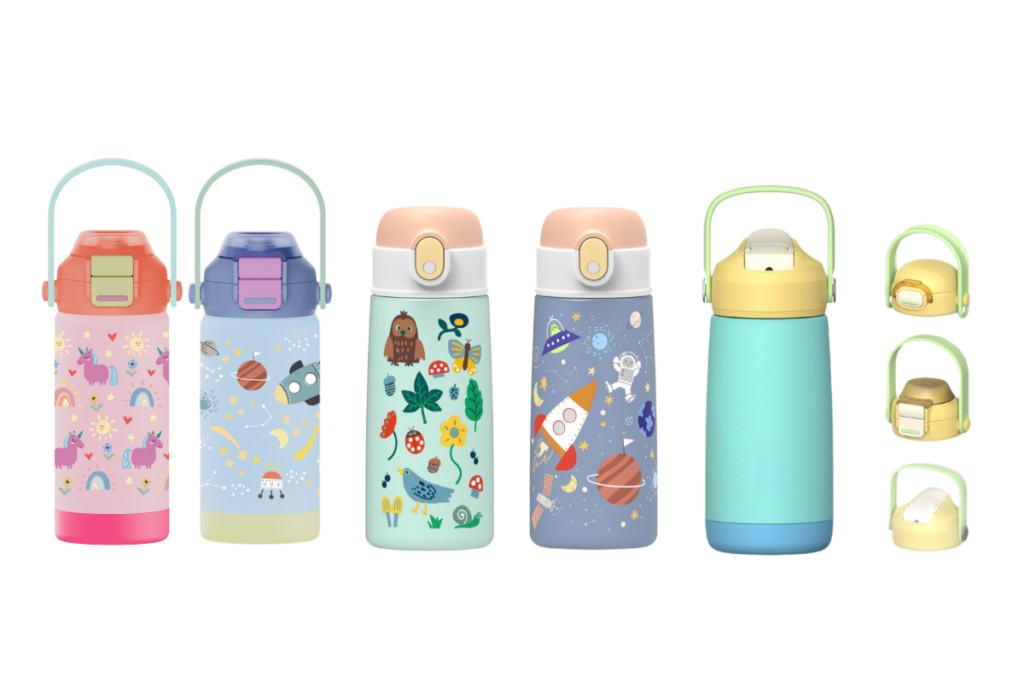
Straw lid bottles dominate the kids’ drinkware market.
Why they perform best:
- Easy for children to use without tilting
- Reduced risk of spills
- Suitable for younger age groups
Retail advantage:
- High acceptance rate
- Low return rate (if well-designed)
- Works across multiple markets
Risk point to watch:
Straw mechanism quality (cheap designs often leak)
Flip Top Bottles (Durable & Active Use)
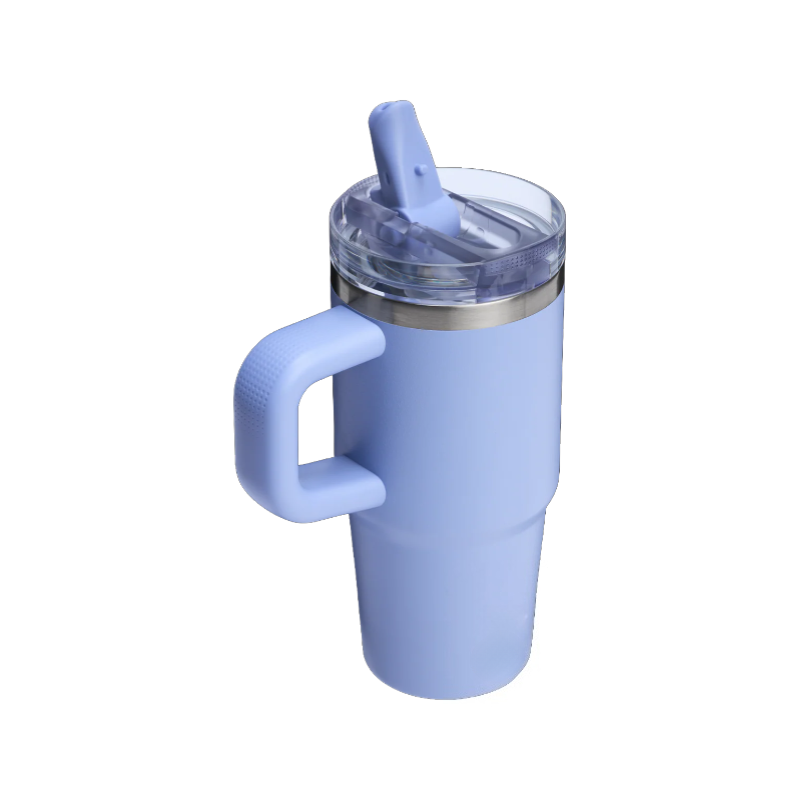
Flip-top bottles are ideal for older children.
Key strengths:
- One-click operation
- Better sealing than straws
- Strong durability
Best for:
- Elementary to middle school
- Sports and outdoor activities
Retail insight:
These bottles tend to have slightly higher margins due to perceived durability.
Small Capacity Bottles (Lower Age Group Focus)
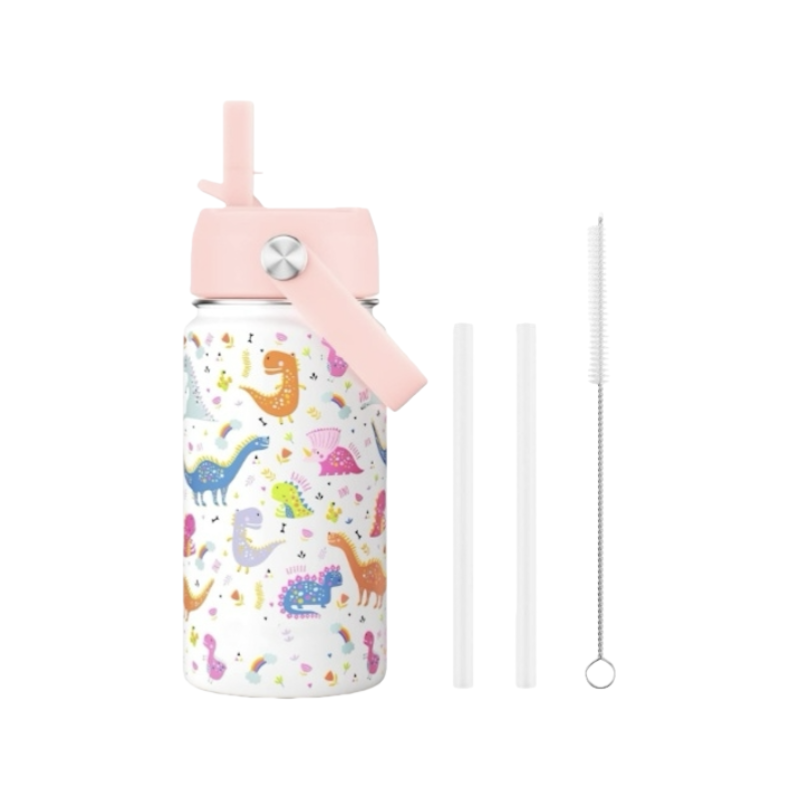
Smaller bottles are designed specifically for younger children.
Typical range:
300ml–500ml
Why they matter:
- Easier to carry
- Lighter weight
- Better ergonomics for small hands
Retail strategy:
Ideal for kindergarten and early school segments.
Cartoon & Themed Bottles (High Conversion Drivers)
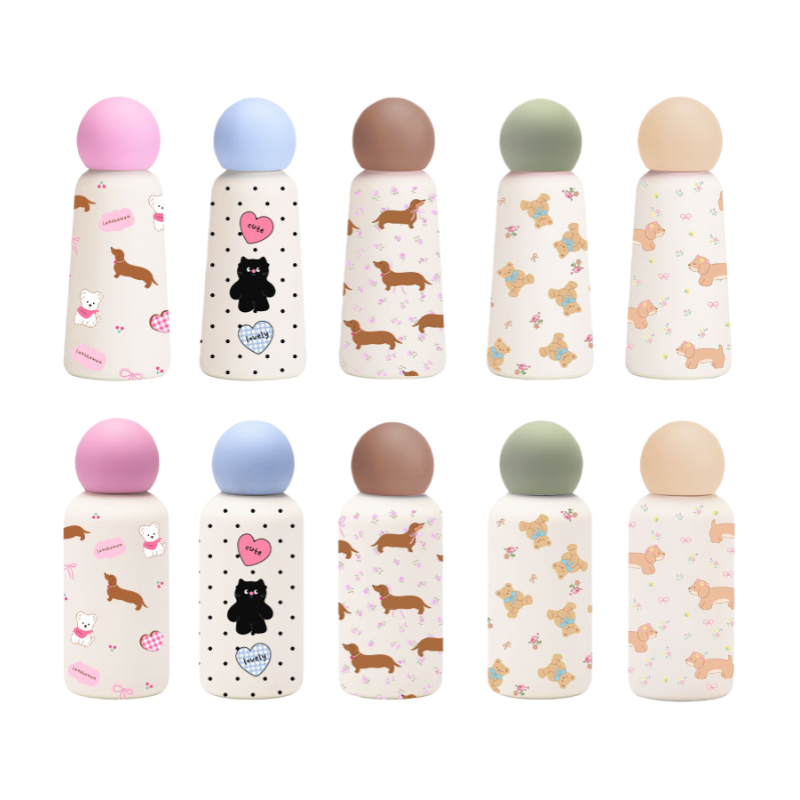
Design is often the deciding factor for children.
High-performing design elements:
- Animal characters
- Bright, contrasting colors
- Fun and playful themes
Important insight:
Design alone can drive purchase—but only if functionality is not compromised.
Key Product Features Retailers Must Prioritize
Leak-Proof Performance (Critical Factor)
Leakage is the #1 reason for product returns.
Retailers must ensure:
- High-quality sealing rings
- Secure lid locking mechanisms
- Proper testing before shipment
Even a small leakage issue can lead to large-scale negative feedback.
Easy Cleaning & Hygiene Design
Parents strongly prefer bottles that are easy to clean.
Important features include:
- Wide mouth opening
- Detachable components
- Smooth interior surface
This directly impacts repeat purchases and customer satisfaction.
Durability & Drop Resistance
Kids drop things—frequently.
Products must be designed to withstand:
- Drops from desks
- Backpack pressure
- Rough handling
Recommended features:
- Thick stainless steel walls
- Protective coating
- Reinforced lids
Safety Materials & Certifications
This is a non-negotiable requirement.
Key elements:
- Food-grade stainless steel (304/316)
- BPA-free plastic components
- Compliance with FDA / LFGB standards
These certifications are essential for entering regulated markets and building trust.
OEM Customization Strategies for Kids Bottle Market
Design-Driven Branding (More Important Than Logo)
Unlike adult products, kids’ products rely heavily on design rather than simple logo placement.
Effective strategies include:
- Full-wrap printing
- Themed collections
- Color-based product lines
Age-Based Product Differentiation
Smart brands segment products by age group:
- Ages 3–6 → small, colorful, simple
- Ages 6–10 → fun + functional
- Ages 10+ → more mature designs
This improves targeting and increases overall sales.
Packaging Strategy Based on Sales Channel
Different channels require different packaging:
- Wholesale → simple packaging
- Retail → display-ready packaging
- E-commerce → protective packaging
Add-On Features That Increase Value
Low-cost additions can significantly improve product appeal:
- Carry straps
- Name tags
- Silicone sleeves
These features enhance usability and differentiation.
How Retailers Should Plan Back-to-School Orders
Step 1: Forecast Demand Accurately
Back-to-school demand is predictable but competitive.
Retailers should consider:
- Previous sales data
- Market trends
- Target customer segments
Step 2: Start Early (Critical)
Recommended timeline:
- April–May: product selection
- May–June: sampling
- June–July: production
Late planning often results in:
- Limited product options
- Higher costs
- Missed sales window
Step 3: Work with Reliable Manufacturers
Choosing the right supplier is critical.
Key capabilities include:
- Stable production capacity
- Fast sampling
- Quality control systems
Factories with strong systems can deliver faster and more consistently
Step 4: Balance Inventory Risk
Retailers must balance:
- Overstock risk
- Stockout risk
A mixed product strategy (different types and price levels) can reduce risk.
Common Mistakes Retailers Should Avoid
Choosing Based Only on Price
Low-cost products often lead to:
- Quality issues
- High return rates
- Negative reviews
Ignoring Real Usage Scenarios
Products must be designed for how children actually use them.
Overcomplicating Product Design
Too many features can confuse users and increase defect rates.
Poor Timing
Late orders = missed season = lost revenue.
FAQ
Q1: What size is best for kids bottles?
A: 350ml–500ml for younger children, up to 600ml for older kids.
Q2: What lid type is best?
A: Straw lids for younger kids, flip-top for older children.
Q3: What is the typical MOQ?
A: Around 1,000 pcs depending on customization.
Q4: Are insulated bottles necessary for school?
A: Yes, they help maintain temperature and improve usability.
Conclusion
Back-to-school season is not just about selling products—it is about meeting real, everyday needs with reliable, well-designed solutions.
Kids insulated bottles, when designed with safety, usability, and appealing visuals, offer strong potential for both retail success and long-term brand growth.
By selecting the right product types, applying effective customization strategies, and planning orders early, retailers can significantly improve their performance during this critical sales season.
Contact us for product recommendations, OEM solutions, and fast quotations tailored to your back-to-school projects.