
An approved water bottle reference sample is useful only when the people making later decisions can identify it, access it and understand what it represents. Keeping a bottle on a shelf is not enough. The buyer and factory need a shared record connecting that physical unit to the accepted product configuration, approval scope and current specification.
The value becomes clear after the development conversation has ended. An inspector may need to compare a logo position, a new purchasing colleague may prepare a repeat order, or a production team may question which cap belongs to the accepted build. A retained reference helps answer those questions without relying entirely on memory, old photographs or a collection of similarly named files.
This guide focuses on custody and use after approval. It offers practical purchasing controls for private-label brands, importers and drinkware factories. It does not prescribe a universal retention period, certify a product or replace the documents and evaluations needed for material, regulatory or performance requirements.

Why both sides should keep an approved water bottle reference sample
A buyer-held copy and a factory-held copy make the approved result accessible where decisions happen. The buyer can use its reference during internal review or a repeat-order discussion. The factory can consult its reference when interpreting an inspection requirement or explaining a proposed change. Each copy should point to the same accepted revision.
This arrangement reduces the need to move the only retained sample between locations. Shipping a reference to an inspector can be necessary, but it introduces handling, transit and availability questions. If the factory and buyer already hold suitable identified copies, they can plan access without leaving one side dependent on a sample that is temporarily elsewhere.
Separate custody does not automatically create agreement. The two bottles may differ, may have been approved for different purposes, or may belong to different revisions. The parties should confirm that the copies represent the same accepted configuration before relying on them as equivalent references.
The important outcome is a shared basis for comparison. A reference that the buyer calls final while the factory considers provisional can create disagreement even when both sides have preserved their samples carefully. Keep the approval record attached to the identity of each physical copy, with limitations visible.
Define what the retained sample controls
Record the approved configuration and purpose
Identify the body model, capacity, lid revision, seal, finish, colour reference, decoration artwork and included accessories. Add the specification or drawing revision where relevant. The record should make it possible to distinguish this reference from another bottle using the same body but a different cap or retail configuration.
State which characteristics were approved on the sample. It might serve as an appearance reference, a fit reference or the accepted physical example of the complete sellable product. If some features were provisional or excluded, list them. A limited colour approval should not silently become approval of a different lid or an unreviewed packaging claim.
The physical sample and the written requirements should work together. A sample can communicate visible appearance and aspects of interaction, while material identity, dimensional limits and performance criteria need suitable documentation and evidence. Specify which record controls each decision instead of expecting the sample to communicate everything.
Keep terminology separate from evidence
Some teams call a retained approved unit a golden sample, master sample or sealed sample. Agree the meaning within your project. The name does not establish who approved it, whether it represents the production build or which requirements were evaluated.
Our golden sample versus pre-production sample guide explains that distinction. The focus here is what happens afterward: keeping the accepted reference traceable and useful through inspection, shipment questions, personnel changes and repeat orders.
If the sample record and the specification conflict, resolve the discrepancy before using either as an inspection basis. Do not leave an operator or inspector to infer whether a visible sample feature overrides a written requirement. The retained unit is most useful when its role is explicit.
Choose reference copies deliberately
Decide which units will be retained and where they will be held. Depending on the project, the buyer, factory and inspection provider may each need access. The quantity should follow the intended uses, review activities and evaluation needs; there is no fixed number of retained bottles prescribed by this guide.
Review proposed copies against the same accepted requirements. If one unit differs in an area that matters, record the difference or select another suitable copy. Do not assume that units from one sampling batch are interchangeable simply because they arrived in the same carton.
Assign separate physical identifiers linked to one approval revision. For example, the record can distinguish the buyer copy from the factory copy without implying that they are different product versions. Keep photographs of each identified unit so that its appearance and custody can be recognised later.
Where destructive or repeated functional evaluation is needed, plan other specimens. A unit used until its coating wears, seal changes or surface becomes damaged may no longer be suitable as the retained appearance reference. Explain which samples are protected references and which are available for testing or demonstration.
| Reference role | Practical use | Control to agree |
|---|---|---|
| Buyer-held copy | Internal review, incoming comparison and repeat-order planning | Named custodian, location and link to the accepted specification |
| Factory-held copy | Production interpretation and inspection preparation | Access for the relevant quality team and protection from uncontrolled changes |
| Inspection access copy | Physical comparison during an agreed inspection | Availability, identity and applicable written criteria |
| Working or demonstration copy | Repeated handling, presentations and assembly discussion | Clear distinction from a protected reference |
| Evaluation specimen | Checks that may alter or destroy the product | Separate identity, test record and post-evaluation status |
A copy’s location does not determine its authority. A factory working sample might be convenient to access, but it should not replace the agreed reference without a documented decision. Give the people using the register enough information to choose the right unit for the question.
Create an identity record that survives a handover
Give the reference a durable identifier that can be connected to its storage container and documentary record. Choose a method appropriate to the product and avoid damaging a surface being used for appearance review. If a hanging tag can be detached, agree how the unit and tag will remain reliably associated.
Record the project or order, approved revision, approval date, relevant reviewers and approval scope. Identify the bottle and component configuration and link the current artwork or drawings. A record saying only final sample is difficult to interpret once the original project team is unavailable.
Photograph enough views to support identification and document the condition at handover. Include the identifier in the photographic record where practical. These images help locate and recognise the reference, but do not replace physical comparison when the decision depends on texture, fit or another characteristic that a photograph cannot establish adequately.
Keep the physical location specific. A named shelf or cabinet position, custodian and access procedure is more useful than factory office. If the unit is transferred, update its location and status promptly. The objective is retrieval by another authorised colleague, not reliance on the memory of one employee.
Store the sample to preserve its intended reference value
Protect the characteristics that will be compared
Choose storage that protects the relevant surfaces and components from unnecessary handling, abrasion and contamination. Use suitable separation between items and packaging that does not introduce damage of its own. Confirm practical storage needs for the actual materials and finish rather than assuming every bottle can be kept under identical conditions.
Consider foreseeable exposure in the chosen location. A display window, frequently used packing bench or area where loose parts are mixed may be unsuitable for a protected reference. The purpose is to preserve a useful comparison, not to claim that ordinary storage creates a calibrated or certified standard.
Keep the intended assembly and accessory configuration identifiable. If a cap or gasket is removed for a legitimate review, record the handling and restore the correct components afterward when appropriate. Do not exchange parts with another sample simply because they appear to fit.
Separate routine use from controlled reference handling
A retained sample should not drift into being the office drinking bottle, a trade-show demonstration unit or a spare-parts source. Repeated use can change the very features the team later wants to compare. Provide a working copy when routine handling is expected, with its role clearly marked.
Plan access rather than locking the reference away without a usable procedure. The quality team should know whom to contact, how to record a loan and which activities are permitted. Restricted availability can be as disruptive as uncontrolled handling when an inspector arrives and nobody can retrieve the approved unit.
When a reference is sent elsewhere, use appropriate protective packing and document the transfer. Identify the recipient, purpose, dispatch condition and expected return or next location. On receipt, confirm the identifier and condition before assuming it is still suitable for its previous role.

Check condition before relying on an old reference
Review the sample’s condition when it is used for a consequential comparison and at suitable project events, such as a long-delayed reorder or a custody transfer. The frequency should reflect the intended role, materials, handling and storage history. This guide does not prescribe a universal monthly or annual review interval.
Look for changes that could affect the decision: surface damage, altered appearance, missing components, a changed assembly or uncertainty about identity. Distinguish an observed change from a conclusion about its cause. A mark on a retained sample does not by itself explain whether it arose during production, transit or later handling.
If the reference is no longer reliable for one characteristic, limit its use accordingly. It may remain useful for identifying a configuration while being unsuitable for a sensitive appearance comparison. Record the limitation and decide what other accepted evidence can support the current decision.
Do not improve the reference informally by repainting it, replacing a seal or polishing a surface and then presenting it as unchanged. If restoration or replacement is needed, agree and document the process with the relevant parties. A clean-looking unit is not necessarily a faithful continuation of the original approval basis.
Use the reference during inspection with clear criteria
Tell the inspection provider which unit and specification apply before the inspection is booked. Confirm that the reference will be available at the required location and that its scope matches the inspected configuration. An inspector should not have to select the controlling bottle from several unlabelled samples on arrival.
QIMA’s sample review service describes using reference samples for comparison and reviewing products against technical files and agreed criteria. That supports pairing physical references with written requirements. It does not mean that any retained bottle automatically qualifies the whole shipment or replaces an inspection plan.
Define how a comparison will be made for the relevant characteristic. Appearance, dimensions and functional requirements can need different methods and acceptance bases. If a borderline result is outside the agreed criteria, escalate it to the responsible reviewer rather than inventing a new limit during the inspection.
Record the comparison evidence and identify the reference used. A report can state which sample code, specification revision and production configuration were considered. That connection is valuable later when a buyer needs to understand whether two inspection records used the same basis.
Keep the reference connected to complete packaging
A bottle reference alone may not identify the whole retail unit. Link it to the accepted accessory list, packaging structure, insert, artwork and care wording where these are part of the supplied configuration. A repeat order can use the right bottle and still have the wrong product information or packing arrangement.
Retain packaging evidence appropriate to the decision. A physical carton may be needed for appearance or fit comparison, while artwork and packing instructions need controlled files. Do not expect one flattened box or a photograph of a gift set to answer every future question about materials and assembly.
The packaging sample approval checklist covers those separate release decisions. For ongoing sample custody, the key is that the bottle and packaging records identify the same accepted build, with any later change linked to the affected references.
Review the reference before a repeat order
Begin a reorder by checking whether the previous approved configuration is still the one being purchased. Confirm the bottle, lid, finish, decoration and included parts rather than relying only on a familiar model number. The buyer may have changed its sales claim, artwork or accessory bundle since the first order.
Ask the factory to disclose relevant component, material, tooling or process changes that affect the accepted requirements. A retained sample makes the earlier result tangible, but it does not prove that the current proposed build uses the same inputs or production route. Evaluate changes against the requirements they can affect.
Decide whether the existing reference remains applicable, needs a documented limitation or should be replaced by a newly reviewed reference. The response should fit the change. A simple artwork update and a redesigned closure raise different questions, even when the order uses the same bottle body.
If another development round is needed, use the sample revision planning guide to define its purpose. The retained sample provides the previous baseline; it should not prevent the team from recognising a legitimate new requirement.
Set a retention period by purpose and agreement
Discuss how long the reference needs to support production, shipment review, foreseeable quality questions and repeat orders. Consider customer or contractual requirements with the responsible team. Do not assume a single retention duration applies to every drinkware project or market.
Assign a review point for samples that are no longer actively used. The decision may be to retain them, transfer them to an archive, replace the active reference or dispose of them through an agreed process. Record who can make that decision and which documentary history must remain available afterward.
If space is limited, prioritise by the actual reference role and business need rather than quietly discarding old units. A useful archive register identifies what was retained, where it is, why it remains relevant and what limitations apply. An extensive collection without retrieval or status control provides little operational benefit.
Tell the other party before retiring a reference whose availability was part of the agreed review arrangement. If the factory removes its only accessible copy while the buyer still expects it to be used for a reorder, the disagreement appears at the worst time. Make the transition visible.
Use a simple custody and revision register
The following fields are a proposed purchasing tool, not a prescribed standard. Adapt them to your team and keep the information proportionate to the risk and frequency of use. A concise current register is more helpful than a complicated template that nobody maintains.
| Field | What to record | Why it matters later |
|---|---|---|
| Physical identity | Sample code and photograph linked to the specific unit | Distinguishes it from similar or superseded samples |
| Approval basis | Configuration, accepted revision, approval scope and relevant documents | Explains which decisions the sample can support |
| Custody | Holder, named custodian and storage location | Allows another authorised reviewer to retrieve it |
| Condition | Observed changes, damage and use limitations | Prevents an unsuitable reference controlling a comparison |
| Movement | Loan purpose, recipient, dates and return condition | Keeps transfers and availability traceable |
| Version status | Active, limited-purpose, superseded, archived or retired | Prevents an old sample being used as the current instruction |
| Retention decision | Agreed review point, decision owner and next action | Connects storage effort to an ongoing project need |
Keep the register linked to the files people already use for the order, so that the physical reference is not managed in isolation. Give changes a date and owner. If the record is updated after a loan, retain enough history to explain why the current condition or location differs from the previous entry.
When a new revision becomes active, identify which previous unit it supersedes and for which purposes. Some projects may retain an earlier colour reference while changing a lid configuration. Record that limited relationship explicitly instead of allowing several units to carry an unqualified final label.
Handle disagreements without altering the evidence
If buyer and factory copies appear different, first confirm their identities, approval revisions and condition. Check whether they were accepted for the same purpose and whether either was changed or damaged after handover. The disagreement may involve custody or documentation as well as manufacturing.
Use the agreed specification and comparison method to frame the issue. A statement that one unit looks better is difficult to resolve without identifying the characteristic and viewing basis. Gather photographs and records as appropriate, while preserving the physical items needed for further examination.
Do not replace a disputed reference quietly or select the most convenient version to support a preferred conclusion. Record any decision to use alternative evidence or appoint a qualified reviewer. This is a practical evidence-preservation approach, not a claim about the legal outcome of a particular dispute.
If the reference is missing, record the gap. Review the remaining approval files, photographs and other identified copies, then agree how the current order will be assessed. A replacement may be possible, but it should be reviewed and identified transparently rather than backdated as the original unit.
A hypothetical reorder with two different memories
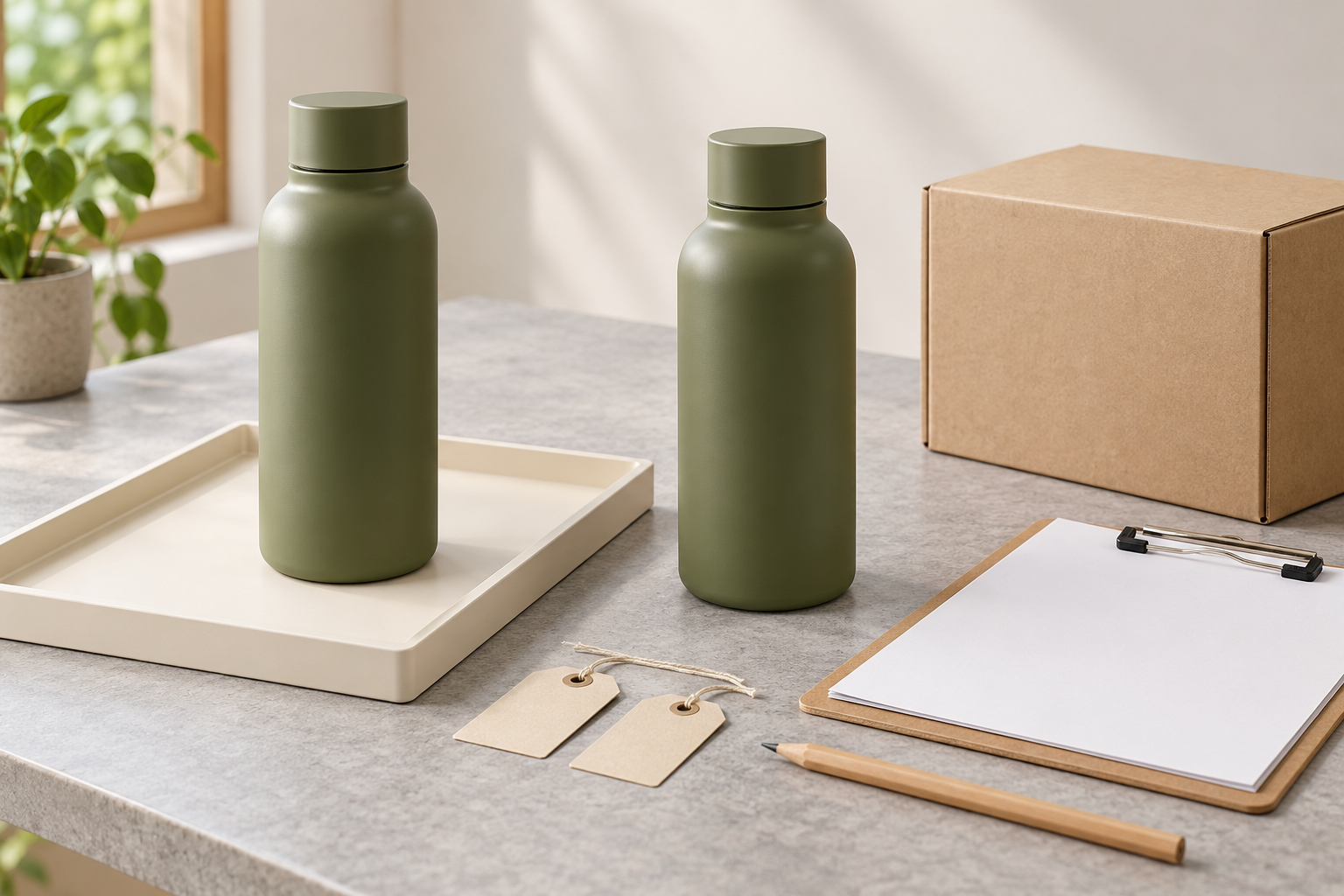
Consider a hypothetical private-label brand that approved an olive bottle with a screw lid and a small printed logo. The buyer retains an identified reference, but the factory keeps an earlier trial unit on a nearby shelf. Months later, a different purchasing colleague starts a reorder using the same product nickname.
During the review, the buyer notices that the proposed logo position differs from its retained copy. The factory believes it has followed the correct sample. Comparing the identifiers and approval records reveals that the factory working unit belongs to a superseded artwork revision.
The useful response is to preserve both units, confirm the current approved basis and correct the reference access process. The teams then assess the proposed order against the agreed revision and decide what evidence is needed before work proceeds. Simply blaming the latest operator would leave the underlying reference-control problem unresolved.
This is an illustrative purchasing scenario, not an actual ShinyStar customer case. It shows why custody and revision status matter alongside the physical condition of a retained bottle. An intact sample can still mislead a team when it represents the wrong accepted version.
Frequently asked questions
Is a retained reference sample the same as a test specimen?
Not necessarily. A reference is kept for a defined comparison purpose, while a specimen may be used in an evaluation that changes its condition. Identify the intended roles before testing or repeated handling. If a unit has been altered, record the effect on its suitability rather than assuming it remains an unchanged approval reference.
Must the buyer and factory retain identical copies?
They should agree which copies represent the accepted requirements and record relevant differences. Units that look similar are not automatically equivalent. Review them against the same basis, give each an identity and link them to the shared revision. The appropriate arrangement depends on the uses and people requiring access.
Can photographs replace the physical reference?
Photographs are valuable for identification, documentation and some visible discussions. They do not answer every question about texture, fit or physical condition. Determine which future decisions require access to the actual unit and retain suitable evidence for the others. Do not treat the convenience of a photograph as proof of every characteristic.
How long should an approved sample be kept?
Agree the period according to the project’s production, quality, reorder and applicable contractual needs. No universal duration is stated here. Assign a decision owner and review point so that retirement or archive transfer is intentional. If another party relies on access to the sample, coordinate the change before removing it.
Should a sample with a damaged finish be thrown away?
First identify the damage and its effect on the reference role. It may still be useful for configuration history while being unsuitable for appearance comparison. Record the limitation and agree any replacement. Disposal should follow the retention decision rather than an informal attempt to remove inconvenient evidence from the project.
Does the reference prove that a reorder uses the same materials?
No. A physical unit does not establish the identity of materials in a later proposed build. Review the current specification, supplier change information and appropriate supporting evidence. The retained sample helps identify the earlier accepted configuration, but it does not replace material documentation or applicable product evaluation.
What should happen when a new sample supersedes the old one?
Identify the new revision, record what it replaces and state the accepted scope. Mark the earlier unit as superseded or limited-purpose while retaining the necessary history. Tell the buyer, factory and inspection team which reference now controls their activity. Avoid relying on a label that says latest without explaining the relationship.
What should buyers ask ShinyStar about reference retention?
Ask which approved units will be retained, how they will be identified, who will hold them and how access will be arranged for inspection or reorder review. Include the relevant product and approval records. Retention arrangements, storage needs and any additional samples should be confirmed for the particular project.
Keep the approved result usable after the project meeting ends
An approved water bottle reference sample is an ongoing purchasing resource when its identity, purpose, condition and location are clear. Match the buyer and factory copies to the accepted requirements, preserve the surfaces and components that matter, and maintain a record that another colleague can understand.
Use the reference alongside the specification during inspection and repeat-order decisions. Review changes and ageing before relying on an old unit, and retire superseded references through an agreed process. That turns sample retention into a workable control rather than a collection of bottles with uncertain histories.
For your next drinkware order, send the selected product configuration and reference-sample requirements through the ShinyStar quote and sample enquiry page. The discussion can cover which physical units and records should remain available after approval for the decisions your team expects to make.