Custom water bottle pilot production is worth discussing when the remaining uncertainty concerns the manufacturing route, not simply the appearance of another sample. The buyer may like the design, yet still need evidence that the intended materials, components, assembly sequence and finishing operations can produce an acceptable group of products before the full order is released.
That does not mean every custom bottle project needs a separate pilot run. An established configuration with well-understood processes presents a different decision from a new closure, revised assembly or unfamiliar decoration combination. A useful pilot has a defined question, a representative build, a review plan and a decision that the results will support.
This guide uses pilot production to mean a deliberately limited run intended to learn about the proposed production configuration and process. Supplier terminology can differ, so agree the meaning in writing. The planning framework below is purchasing guidance, not a fixed test standard, a prescribed batch size or a promise that a pilot eliminates production risk.
Start with the question a pilot should answer
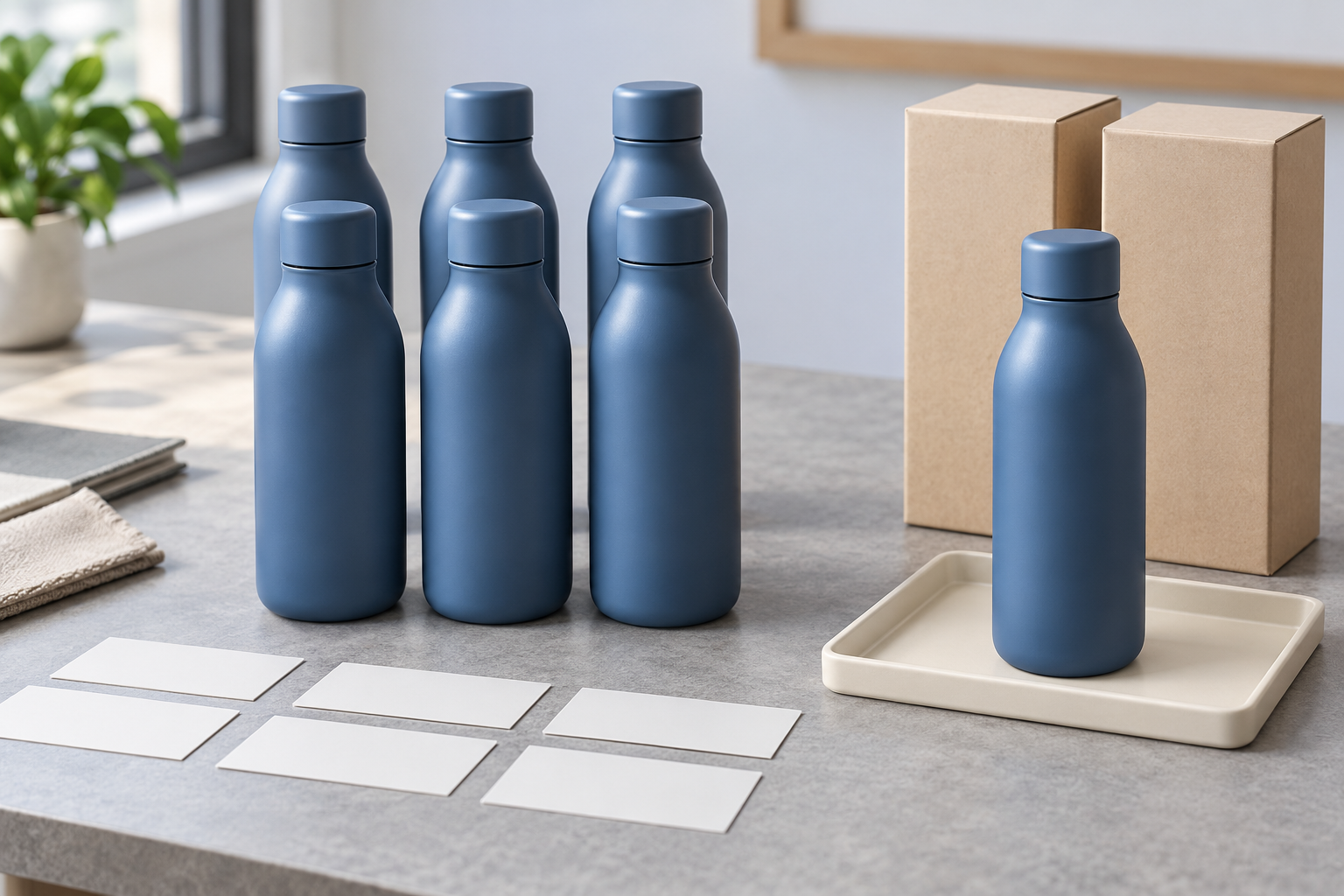
Ask what remains uncertain after the product samples have been reviewed. Can the supplier reproduce the agreed fit using the intended parts? Does the decoration route produce consistent results across the proposed build? Can the packing team assemble the complete set without improvising around a difficult component?
A pilot should generate evidence for a decision that cannot be answered adequately by reviewing one carefully prepared unit. Identify that decision before discussing quantities. Otherwise, a supplier may produce a small batch that looks reassuring but does not exercise the part of the manufacturing route that concerns the buyer.
If the unresolved question is simply which lid the brand prefers or where the logo should sit, settle that design decision first. Producing more units of an undecided configuration can add cost without making the decision clearer. A pilot works best when the intended build is sufficiently stable for the results to be interpreted.
Write a purpose statement such as evaluating the specified closure assembly using the intended components and process. Add the characteristics and evidence to review. This is more actionable than requesting a pilot because the order feels large or because another brand arranged one.
When custom water bottle pilot production can add value
A new or materially changed interface
A new lid, revised bottle opening or changed sealing arrangement can create questions about how parts behave together across a run. A development sample may demonstrate the intended interaction without showing the effect of ordinary variation in the proposed process. Ask the supplier which interface controls require confirmation and how the pilot will address them.
A pilot is not a way to postpone basic design work. If the supplier cannot explain the critical interface or the required function, define those requirements first. The run should investigate a controlled configuration rather than serve as an expensive attempt to discover what the product is supposed to do.
A changed process or unfamiliar combination
Changes in decoration, finish, component supply or assembly can justify reviewing whether previous evidence still applies. The important issue is the effect on the accepted requirements. A familiar bottle body does not automatically make every new combination familiar to the manufacturing team.
Ask what will be different from earlier successful builds and which differences the proposed run will include. If the pilot uses a convenient substitute while the full order will use another material or operation, its relevance is limited. Disclose those limitations before relying on the result.
A complex sellable set or difficult packing sequence
A bottle, removable accessory, spare part and customised package can work individually but create a difficult packing operation together. A limited representative run can help the team evaluate assembly, handling and identification of the complete configuration before repeating the sequence at full-order volume.
Keep the question concrete. The pilot might examine whether the specified contents can be packed in the intended order without damaging customer-visible surfaces or mixing variants. It should not be described as complete transport qualification unless a suitable packaged-product evaluation is separately planned and performed.
| Situation | Question to resolve | Evidence a pilot might provide | What it does not automatically prove |
|---|---|---|---|
| Revised closure interface | Can the intended parts be assembled and meet the defined requirements? | Identified output and relevant fit or functional observations | Performance of every future unit or untested configuration |
| New finishing or decoration route | Can the proposed process reproduce the accepted result? | Appearance and other agreed evaluations tied to actual process conditions | Durability or compliance properties outside the evaluation scope |
| Multi-item retail set | Can the intended sequence produce the correct complete pack? | Packing observations, configuration records and defect findings | Transport performance without appropriate separate evidence |
| Unchanged established configuration | Is there a new uncertainty that justifies a separate run? | Possibly limited additional information | That a pilot is commercially necessary merely because it is available |
When another approach may be more useful
If the uncertainty concerns artwork layout, a revised drawing or proof may close the question before a physical run is needed. If it concerns how a sample is used or assembled, a focused technical review may identify the next step. Choose the evidence based on the decision rather than making pilot production a default extra stage.
For an unchanged established model, ask what the supplier already knows about the proposed materials and route and what has changed since the relevant evidence was generated. The buyer can then decide whether early production checks, an agreed hold point or another targeted activity addresses the remaining risk more directly.
A commercial market trial is also different. Selling a limited quantity can investigate demand or customer response, while a manufacturing pilot investigates a defined production question. One group of goods might serve more than one purpose, but the approvals, product requirements and records for each purpose should remain clear.
Do not treat a smaller order as a pilot solely because its quantity is low. If it follows no defined review plan and leads to no manufacturing decision, it may simply be a small commercial order. Agree what work is being purchased and how the outcome will be used.
Separate a pilot run from product sample approval
A pre-production sample can represent the proposed build and become an accepted physical reference. A pilot investigates a limited run under identified conditions. The two activities can be linked, but approving a sample does not automatically mean the proposed process has been exercised across the intended pilot scope.
The golden sample versus pre-production sample guide explains the role of an accepted reference. Use that reference with the written requirements when reviewing the pilot, while recording any differences between the reference and the actual run.
Protolabs describes an initial sample run for review before full production within its own production service workflow. That provides an example of staged manufacturing review, not a drinkware-specific requirement or an endorsement of any particular pilot quantity. See its production manufacturing overview.
Likewise, an initial production inspection is a review activity, not necessarily a separately commissioned pilot. QIMA describes its initial production check as taking place before and during early production. Discuss the appropriate relationship between inspection and your proposed run instead of assuming their names describe the same service.
Define the production configuration before the run
Identify the parts and revisions
Record the bottle body, capacity, lid, seal, handle, finish, decoration and accessories included in the pilot. Link the current drawings, artwork and specifications. The buyer and supplier should be able to distinguish the pilot build from an earlier development sample and from another variant in the planned collection.
Identify the proposed materials and component sources to the extent needed for the agreed review. A change that affects the requirement should be visible in the plan. Do not replace a difficult-to-obtain component for convenience and then describe the resulting run as representative of the intended sellable configuration.
Identify the route and its limitations
Ask which tooling, equipment, operations and assembly sequence the run will use. Explain any differences from the intended full-order route, including manual adjustments or special handling. A limited run can produce useful evidence without matching every future condition, provided the team understands which conclusions it can support.
Discuss whether the run reaches the relevant operations. If the concern involves decoration and packing, a batch of unfinished bodies cannot close it. Conversely, a final assembly trial may answer an assembly question while leaving earlier body-manufacturing questions outside its scope. State the boundary rather than using pilot as an all-purpose approval label.
Choose quantities and coverage with a reason
There is no universal pilot quantity stated in this guide. Ask the supplier and relevant technical or quality reviewer to propose a quantity based on the manufacturing question, process setup, available parts, planned evaluations and the evidence needed for the decision. Explain the rationale in the plan.
Distinguish the number of units produced from the number selected for each review or evaluation. Some observations concern assembly or the handling sequence, while other requirements need defined specimens and procedures. Do not assume a convenient sample count demonstrates the consistency of the whole process.
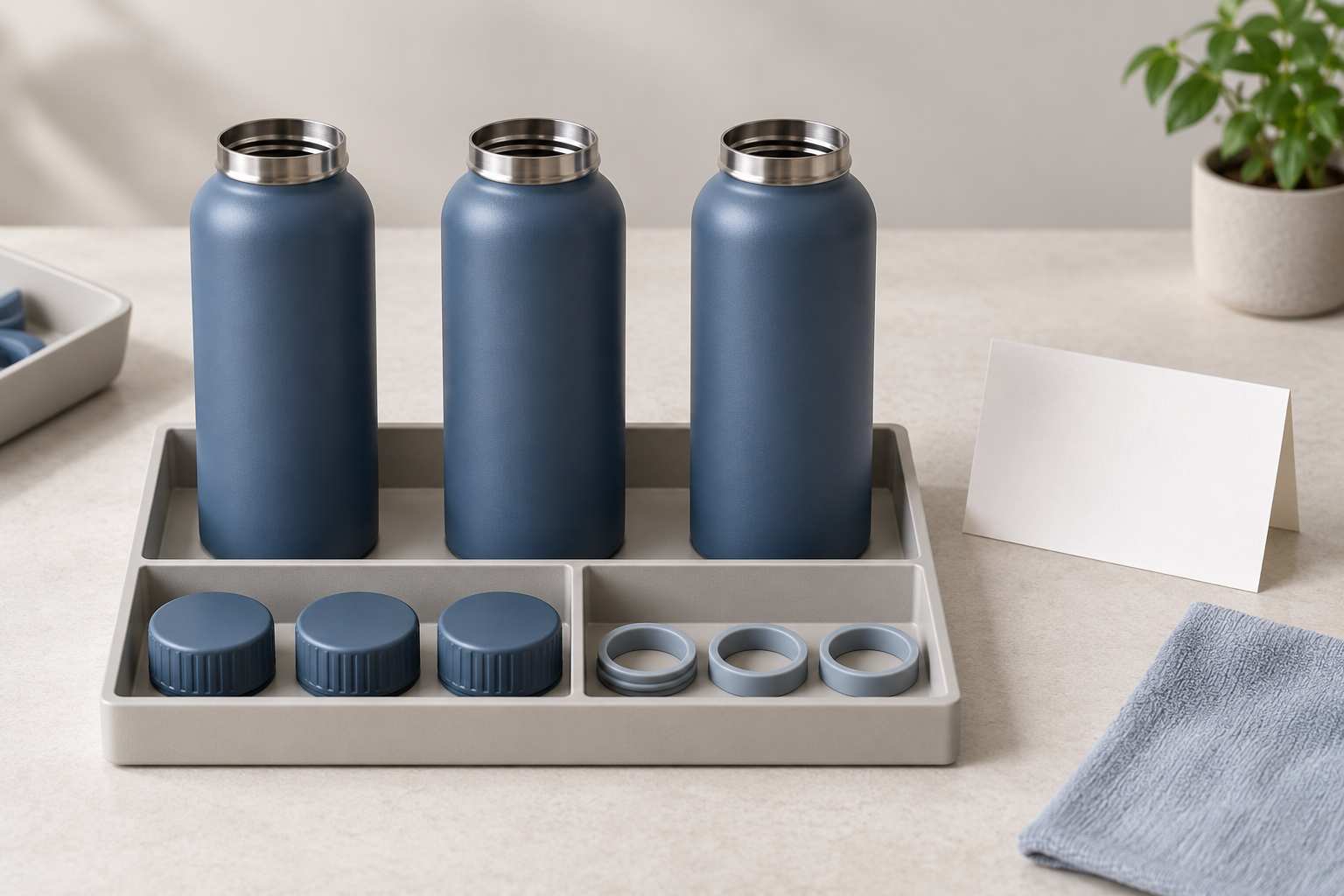
If the collection includes several colours, lids or sizes, identify which combinations the pilot covers and why. Grouping can be useful where there is a justified basis, but one configuration should not silently represent all variants. Record exclusions and the evidence still needed for combinations outside the run.
Also plan what happens to units used in evaluation. Destructive checks and repeated handling can affect their suitability for other purposes. Keep production output, retained references, evaluated specimens and potentially saleable goods identifiable, with disposition decided under the agreed requirements.
Agree the evidence and acceptance basis in advance
List the characteristics to be reviewed and connect each to a method and decision criterion. Depending on the project, this may include dimensions, assembly behaviour, specified function, appearance, decoration and packing correctness. Have qualified parties define technical procedures appropriate to the selected design rather than inventing generic thresholds.
Separate observations from acceptance. A photograph of neatly arranged bottles documents a scene, but it does not establish that a requirement was met. A report should identify the units, conditions, checks performed, results and any deviations so that another reviewer can understand the conclusion.
Agree how defects, rework and interruptions will be recorded. A run in which units are repeatedly adjusted before presentation tells a different story from one that produces the accepted result through the intended sequence. Rework can be useful development information, but it should not disappear from the evidence.
Do not describe a favourable pilot outcome as a universal certification or lifetime performance guarantee. It supports the specific decision within its scope. Product-specific regulatory evidence and any separately required performance or distribution evaluation still need to be addressed through appropriate channels.
Write a pilot brief that purchasing and production can use
A useful brief aligns the commercial authorisation with the technical question. It should explain what the supplier may produce, which evidence will be returned and who can release the next activity. The following table is a proposed purchasing checklist, not a prescribed industry form.
| Brief item | What to agree | What would leave the decision unclear |
|---|---|---|
| Purpose | The specific uncertainty and decision the pilot supports | A general request to prove the product is good |
| Build and route | Configuration, revisions, operations and known differences | Substitutions or special handling that are not disclosed |
| Quantity and coverage | Produced units, review plan and included variants | Assuming one convenient group covers every combination |
| Evidence | Records, observations, evaluations and responsible reviewers | Relying only on selected photographs or an unexplained pass |
| Commercial scope | Costs, timing, included work and disposition of output | Treating the pilot quote as permission for the full order |
| Hold and release | Who decides what may proceed after review | Automatic continuation while important findings remain open |
| Change response | How corrections and affected evidence will be reviewed | Changing the configuration without assessing applicability |
Ask the supplier to acknowledge the same references before work begins. If some inputs are unavailable or the proposed route differs from the plan, resolve that limitation before the run is interpreted as representative. The brief can remain concise while still making the scope unambiguous.
Keep the pilot release separate from the full-order release. Even where materials are purchased in advance for commercial reasons, the agreement should identify what work is authorised and which commitment is conditional on the pilot review. Otherwise the buyer may discover that production has continued while it believed a decision was still pending.
Review the process as well as the finished units
Ask the supplier to record observations at the operations relevant to the pilot question. Note assembly difficulties, repeated adjustments, damage during handling, identification errors and other events that affect the agreed requirements. A selected finished sample may conceal work that would be difficult to repeat economically or consistently.
Keep meaningful traceability within the run. Identify the units or groups used for the review and the conditions associated with them. The level of detail should suit the decision; avoid collecting extensive data without a plan for how it will be interpreted.
If an intended condition changes during the run, record the change and distinguish the affected output. Combining observations from different configurations without explanation makes the result hard to use. The supplier and reviewer should decide which evidence remains relevant and which questions need another controlled check.
A short pilot can reveal practical issues, but it does not automatically establish full-rate capacity or long-run stability. If throughput or scale is part of the purchasing decision, identify the evidence needed for that question specifically. Do not infer it only from the presence of acceptable units at the end of the run.
Keep pilot output separate from earlier samples when the report is prepared. If photographs, measurements or evaluations use units from another source, identify that source explicitly. A review package assembled from attractive development samples and a different production group can make the evidence difficult to interpret. The report should let the buyer connect each finding to the run actually authorised, without assuming that every bottle shown was produced through the same route.
Make a release decision that matches the findings
Review the results against the original purpose and acceptance basis. Determine which requirements were addressed, which remain open and whether any deviations limit the conclusion. An unexplained statement that the pilot passed should trigger questions about what was actually reviewed.
The appropriate decision may be to release a defined next activity, request corrective action, narrow the configuration or hold the project. If approval is limited, state the limit in terms the supplier can implement. A conditional decision should identify the open issue, responsible person and evidence required to close it.
When changes are necessary, assess what they affect before carrying forward earlier results. A new component or revised assembly step may change the basis of the pilot. The sample revision planning guide helps distinguish a correction from a new requirement or further development investigation.
Preserve the accepted evidence and retain appropriate reference units. The approved reference sample retention guide explains how to keep those units identifiable and accessible. A retained pilot unit should carry its actual scope, not become an unqualified reference for unrelated future products.
Include the pilot in the cost and launch schedule
Request a quotation that distinguishes preparation, materials, setup, production, relevant evaluation, reporting and shipping where applicable. Ask which activities are included and what happens if the result requires a changed configuration. Pilot cost should be understandable before the team treats it as a necessary project stage.
Discuss the commercial treatment of the output. Some units may be consumed in evaluation or unsuitable for sale, while others might be considered for a defined use after the required acceptance. Do not assume all pilot units can be deducted from the final delivery quantity without reviewing their condition and agreed status.
Schedule the buyer’s review and the release decision alongside the supplier’s work. A completed pilot does not shorten the calendar if the responsible reviewers are unavailable or the acceptance criteria are being negotiated afterward. Identify the decision owner and the information required before the report arrives.
If the launch date cannot accommodate the proposed route, discuss scope, sequencing or product alternatives openly. A simpler established configuration may change the evidence needed. Removing a pilot without addressing the underlying uncertainty simply moves that uncertainty into the full order.
A hypothetical new-lid project
Imagine a brand choosing an established bottle body with a revised lid and a custom retail set. Development samples indicate that the design direction is suitable, but the team still has questions about assembly of the intended components and the packing sequence. It proposes a limited run to address those questions.
Before work begins, the buyer and supplier identify the actual lid revision, seal, body and accessories. They agree which operations the run will exercise, how output will be reviewed and which activity remains on hold. The quantity is selected for that purpose rather than copied from another project.
During the run, the team records an assembly difficulty and reviews its cause. The supplier proposes a controlled change. The buyer does not treat a few acceptable-looking units as sufficient evidence to release the unchanged plan; the relevant reviewer determines which checks must be repeated after the change.
After the affected requirements are addressed, the parties document the accepted configuration and authorise the agreed next step. Normal production controls and the required inspection plan still apply. This is a hypothetical purchasing example, not an actual ShinyStar order or a promise of a particular defect rate or pilot outcome.
Frequently asked questions
Does every custom bottle order need pilot production?
No automatic requirement is stated here. Decide whether there is a specific manufacturing uncertainty that a limited representative run can help resolve. An unchanged established configuration and a newly developed assembly present different questions. Discuss existing evidence, proposed changes and suitable controls before commissioning additional work.
How many bottles should a pilot contain?
Agree the quantity with the supplier and relevant reviewer based on the process question, setup, variant coverage and evaluation plan. Distinguish produced quantity from reviewed specimens. A round number or a small percentage of the order is not, by itself, a technical justification for the scope.
Is pilot production the same as ordering more samples?
Not necessarily. A pilot is intended to investigate an identified production configuration and route through a defined run. Additional samples may answer a design or appearance question without exercising that route. State what each activity represents, its limitations and the decision it is expected to support.
Can one colour and lid represent an entire collection?
Only where there is an appropriate documented basis for the proposed coverage. Identify differences in construction, materials and processes and ask which variants require separate evidence. A pilot using one configuration should not be described as approval of every future combination merely because the bottle body is shared.
Can an initial production inspection replace a pilot?
They address different activities, although they may be coordinated. An inspection reviews specified conditions or output at a stage, while a pilot commissions a defined limited run. Discuss the remaining question with the supplier and inspection provider and decide which combination of activities can provide suitable evidence.
What happens if the pilot reveals problems?
Record the findings against the agreed requirements, investigate the relevant cause and identify the effect of proposed corrections. Determine what evidence must be repeated or added before release. A pilot is useful when its findings inform a decision; it should not be approved automatically because the planned time or budget has been spent.
Does a successful pilot guarantee the full order?
No. Its conclusion is limited by the configuration, route, quantity, observations and evaluations involved. Production controls, change management and appropriate inspection still matter. If full-rate capacity or longer-run consistency is a specific concern, request evidence that addresses that question rather than extending the pilot conclusion without support.
What should buyers send ShinyStar to discuss a pilot?
Provide the selected product, component revisions, artwork, accessories, intended order and remaining manufacturing questions. Include the launch constraints and any customer review requirements. ShinyStar can discuss an appropriate project scope; quantities, timing, costs and evaluation work need confirmation for the actual configuration.
Use a pilot when it can change the production decision
Useful custom water bottle pilot production connects a manufacturing question to a defined run, relevant evidence and a clear release decision. Stabilise the product direction, identify the intended route and agree what the team needs to learn before the supplier commits to the full order.
If another form of review answers the question more directly, use it. If a pilot is justified, preserve its limits and act on the findings rather than treating it as a ceremonial step. The value lies in making the next commitment with a clearer understanding of the proposed production configuration.
To discuss the right route for your next drinkware project, send the product brief and remaining production questions through the ShinyStar quote and sample enquiry page. That gives both teams a basis for deciding whether a pilot adds useful evidence before the full order.